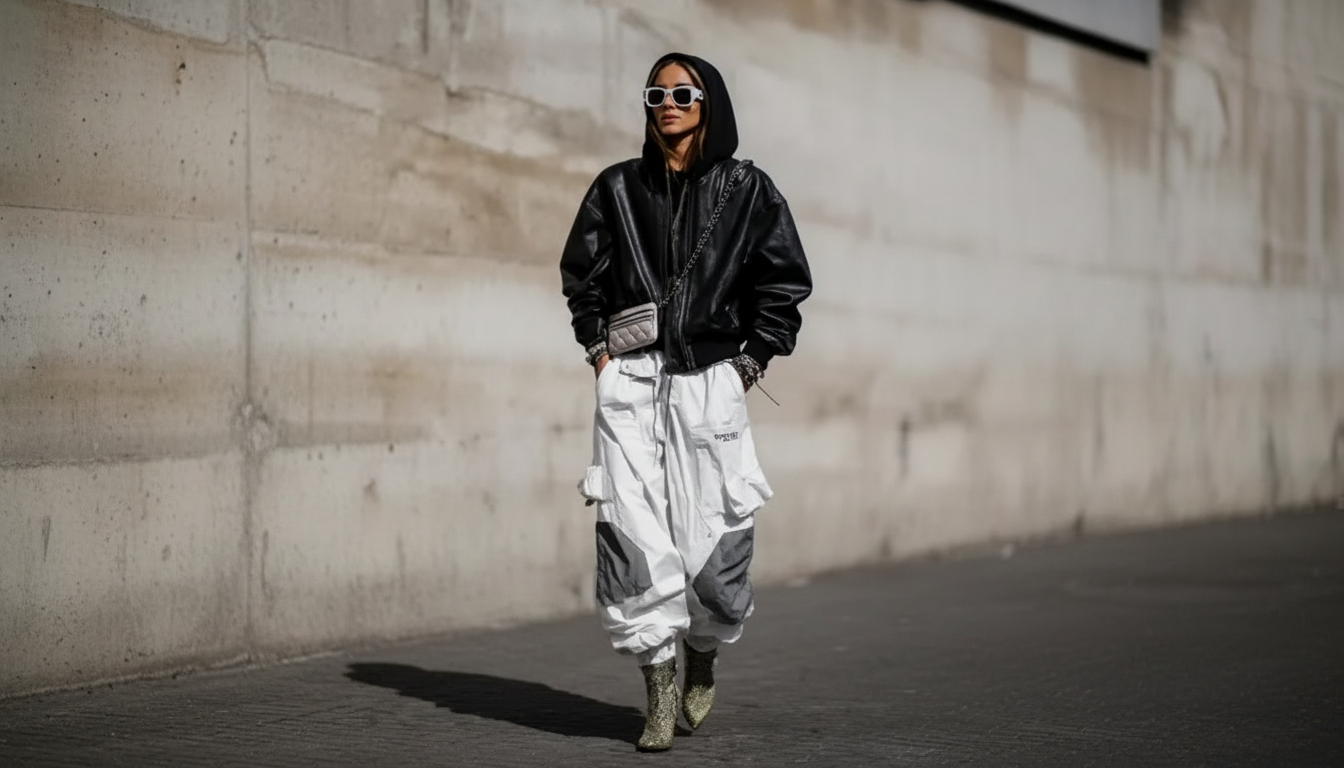
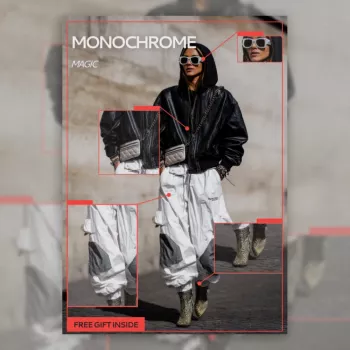
Monochrome outfit styling means building a look around a single color family from head to toe. Instead of mixing multiple hues, you stay within one shade range—like all black, all white, head-to-toe navy, or an outfit made entirely of creams and beiges. The result is a clean, cohesive outfit that feels intentional and polished.
“Monochrome” doesn’t require every piece to be the exact same shade. The most wearable approach is to use tonal variation—pairing lighter and darker versions of the same color (for example, charcoal trousers with a black knit and a graphite coat). This adds depth while keeping the streamlined effect that makes monochrome styling so flattering.
The key is contrast through texture, fabric, and silhouette. A monochrome outfit can combine matte and shine (cotton with leather), soft and structured (a drapey blouse with tailored pants), or chunky and sleek (a ribbed sweater with satin slip skirt). Even within one color, these differences create dimension.
Proportion also matters. An oversized layer—like a long coat or relaxed blazer—over more fitted pieces keeps the look modern. Footwear can match closely for a leg-lengthening effect, or shift slightly within the same color family for a subtle break.
Monochrome dressing is a shortcut to looking put-together, especially when time is short. It also makes a wardrobe easier to mix and match: when most pieces live in a tight palette, almost everything works together. That’s why monochrome is often used as the foundation of a capsule wardrobe.
For a deeper guide on building a cohesive monochrome wardrobe and planning outfits more efficiently, see this monochrome capsule wardrobe guide.
Begin by choosing one neutral you already own a lot of (like black, navy, or beige), then group existing pieces into tonal outfits. Fill only the gaps that prevent complete looks—often shoes, a layering piece, or one versatile bottom.




Leave a comment