
Modern work moves fast—always-on messages, shifting priorities, and blurred boundaries. A sustainable balance comes from a few repeatable systems: clear limits, energy-aware planning, and simple stress-reset tools that fit into real schedules. The goal isn’t a flawless routine; it’s a dependable baseline you can return to, even when deadlines spike.
Many professionals aren’t “bad at balance”—they’re operating inside a work culture that quietly expands unless you design protections.
For practical guidance on stress and coping basics, the CDC’s stress resources offer an evidence-informed overview that pairs well with simple daily systems.
Balance works best when it’s defined as stability over perfection. That means building a minimum routine that can hold during crunch time.
A helpful mental model: if a habit can’t survive a busy week, it isn’t a system yet—it’s a special occasion.
Willpower is a limited resource at the end of a long day. Strong boundaries are designed so the “default” behavior supports you.
For workplace well-being frameworks that organizations and individuals can adapt, the American Psychological Association’s work and well-being materials are a strong reference point.
Stress management doesn’t have to be an hour-long routine. Small “micro-resets” placed between tasks can reduce the intensity of stress before it snowballs.
| Situation | 2–5 minute reset | What it prevents |
|---|---|---|
| Back-to-back meetings | Stand up, shoulder rolls, 5 slow breaths, sip water | Tension buildup and irritability |
| Inbox overload | Set a 10-minute timer, triage into: do/decide/defer/delete | Endless reactive spirals |
| Afternoon slump | Brief walk or stair climb, then a protein-forward snack | Low focus and late-day procrastination |
| After-work rumination | Write tomorrow’s first step + one worry dump line, then close the notebook | Sleep disruption and mental looping |
Time is fixed; energy fluctuates. Planning that starts with energy tends to feel more humane and more effective.
If you want a job-stress lens grounded in occupational health research, NIOSH’s stress at work resources provide helpful context.
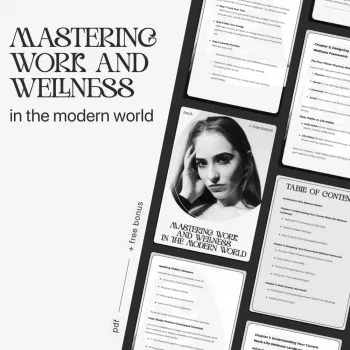
For a guided, planner-style framework that supports boundaries, stress resets, and weekly reviews, explore the Mastering Work and Wellness in the Modern World eBook and stress management planner. It’s designed to reduce guesswork with structured prompts that translate intentions into calendar-level actions.
To strengthen the emotional “recovery” side of balance, pair planning with a simple reflection routine. The How to Build a Weekly Gratitude Habit That Transforms Your Life guide can help you keep the practice small, repeatable, and realistic during busy seasons.
Use the fastest controllable levers: a consistent shutdown routine, stricter notification limits, time-blocked deep work, and 2–5 minute resets between tasks. The key is repeating a small set of actions daily rather than chasing big changes occasionally.
Usually 2–4 core habits are enough: a steady sleep window, brief daily movement, hydration/food structure, and a decompression ritual. Add new habits only after the basics feel automatic most days.
Yes—when it reduces cognitive load and makes boundaries measurable. Prompts, weekly reviews, a single capture system, and scheduled buffers can turn vague goals into specific decisions about what you’ll do, when you’ll do it, and what you’ll stop doing.






Leave a comment