TikTok Shop blends short-form video with built-in checkout, making it possible to turn views into purchases without sending people off-app. For beginners, the fastest path is understanding how TikTok Shop works, setting up the basics correctly, and following a repeatable content-to-sales workflow that stays compliant and measurable.
TikTok Shop is an in-app commerce feature that lets sellers list products, tag them in videos and LIVE streams, and accept payments within TikTok (availability varies by region). Instead of relying on “link in bio” funnels, product discovery can happen directly in the For You feed, search, creator content, and LIVE shopping—often with fewer steps between interest and purchase.
At a practical level, TikTok Shop typically includes product listings, a Shop tab/storefront, shoppable video tags, LIVE shopping tools, and affiliate/creator partnerships. Results improve when content formats match the shopping journey: awareness (fast hooks), consideration (clear demos), and conversion (a simple offer with frictionless checkout).
| Feature | What it does | Best use case | Beginner tip |
|---|---|---|---|
| Shoppable videos | Tags products directly in short videos | Everyday discovery and impulse buys | Lead with the outcome in the first 2 seconds |
| LIVE shopping | Real-time product demo and Q&A with purchase options | High-intent audiences and launches | Pin the top product and repeat the offer every few minutes |
| Shop storefront | Central place for listings, reviews, and policies | Trust-building and browsing | Use clear titles, simple images, and consistent pricing |
| Affiliate/creators | Creators promote products for commission | Scaling content volume quickly | Provide a brief with angles, claims boundaries, and do/don’t list |
Start by confirming eligibility and seller requirements in the TikTok Shop Seller Center for your region. Policies and feature access can change, so build from the source of truth: TikTok Shop Seller Center and the TikTok Business Help Center.
Next, make your profile instantly understandable. Use a clear name, add a one-line niche statement in your bio (what you sell + who it helps), and pin one video that explains what you offer and why it matters. A pinned “start here” clip reduces confusion when a video goes viral and new visitors flood your page.
Keep the early offer stack simple: one hero product and 1–3 supporting items. Pair that with clear shipping and returns expectations (where applicable). Avoid risky claims and keep benefits factual and consistent with platform policies—especially if you’re in sensitive categories. If you plan to work with creators or affiliates, be ready for disclosure rules and be transparent about paid relationships (see the FTC’s Disclosures 101).
A small following isn’t a dealbreaker when the product is easy to “get” in seconds. Strong TikTok Shop products usually have a show-not-tell factor: a visible transformation, a satisfying demo, or a clear before/after. Think in stories, not specs—pain point, quick demonstration, clear result.
To validate demand fast, look for signals you can observe without expensive tools: multiple creators repeating similar formats, comment sections filled with questions that indicate intent (“Does it work on…?” “How long does it last?”), and demos that keep pulling engagement week after week.
Finally, run the math early. Make sure margins can handle platform fees, shipping/fulfillment (for physical items), returns, and creator commissions if you turn on affiliate promotions. A product that “could” sell but can’t profitably scale will create churn and headaches.
Use a structure you can repeat without overthinking:
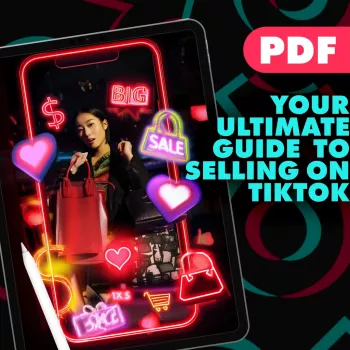
A step-by-step digital download can reduce trial-and-error by providing checklists, content templates, and a clear launch sequence. A practical option is Your Ultimate Guide to Selling on TikTok (digital download), built around setup basics, compliant messaging, and repeatable content workflows.
If you’re looking for simple, demonstrable digital products to test content formats (especially for problem/solution videos), consider niche guides with a clear outcome, such as Cool Without the Cost: Your Smart Guide to Saving on Air Conditioning or How to Build a Weekly Gratitude Habit That Transforms Your Life. Use a guide like a working playbook: track what you posted, what performed, and what to test next.
No—sales can come from discovery when a strong demo hits the For You feed. Consistent posting, clear product tagging, and a product that’s easy to understand quickly matter more than follower count, and features may vary by region.
Start with a direct demo, then a problem/solution clip, and an FAQ or objection-handling video. Lead with the hook in the first two seconds, show proof quickly, and end with a simple call to action tied to the tagged product.
Common causes include a mismatch between the video promise and the listing, an unclear offer, shipping costs or timelines that surprise buyers, and not enough proof of results. Tighten the demo, simplify to one product per video, and make the listing and expectations crystal clear.




Leave a comment