
Shift work can disrupt the body clock, making sleep feel unpredictable and recovery harder to control. A simple, repeatable routine reduces guesswork and supports steadier rest—whether the sleep window falls in the morning, afternoon, or late evening. The checklist approach makes it easier to prepare, protect, and maintain sleep across rotating schedules, long stretches of nights, and quick turnarounds.
Shift worker sleep isn’t just “normal sleep at a weird time.” Sleep timing matters as much as sleep length; daylight, neighborhood noise, and household activity can reduce sleep depth even when your time in bed looks adequate. Rotating shifts can also create a form of “social jet lag,” where workdays and days off compete for different sleep windows, stretching recovery thin.
Energy and focus often swing because light exposure, caffeine timing, meal timing, and fragmented sleep opportunities change from week to week. A checklist helps by building a consistent pre-sleep sequence that cues your body to downshift—even when the clock time changes. For background on how work schedules impact sleep and health, see the CDC’s guidance on shift work and long work hours.
Start with a “sleep anchor”—a primary block you can repeat for several days in a row. Even on rotating schedules, repeating a core sleep block (or a core block plus a planned nap) often improves stability more than trying to “catch up” randomly.
Light is a powerful driver of alertness. Treat it like a switch: brighter light during your work period, dimmer light as your sleep window approaches.
If you suspect your schedule is causing ongoing insomnia, excessive sleepiness, or performance issues, the Sleep Foundation overview of shift work sleep disorder is a helpful reference to discuss with a clinician.
The most effective wind-down routine is the one you can repeat when you’re exhausted. Keep the same order of steps each time so your body starts recognizing the pattern as “sleep is next.”
| Phase | What to do | Practical examples |
|---|---|---|
| Start of shift | Increase alertness with light, movement, and planned caffeine | Bright workspace, short walk, coffee/tea early |
| Mid-shift | Maintain steady energy; avoid grazing nonstop | Balanced meal, water, brief stretch break |
| Last 2–3 hours of shift | Begin tapering stimulation | No new caffeine, lower light when feasible |
| Commute home | Reduce bright light to protect sleepiness | Sunglasses, calm music/podcast |
| 60 minutes before bed | Repeat the same wind-down routine | Shower, light snack if needed, dim lights |
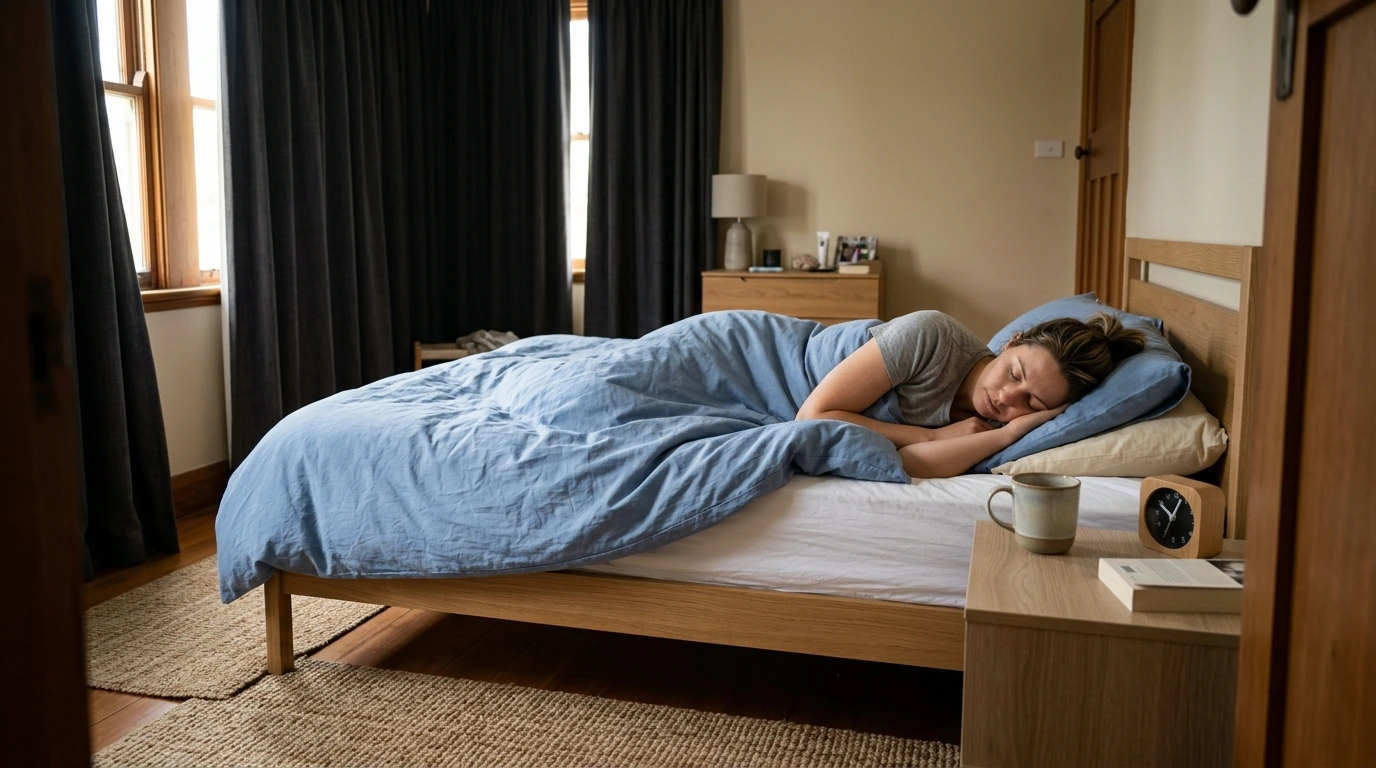
| Sleep window | Block light/noise; keep room cool | Blackout curtains, white noise, 65–68°F (18–20°C) if comfortable |
Keeping your room comfortable without overpaying can also be part of sleep hygiene during hot months. If you’re trying to cool a bedroom efficiently, Cool Without the Cost: Your Smart Guide to Saving on Air Conditioning offers practical ways to stay comfortable while managing energy use.
For a routine you can repeat on night shifts, rotating shifts, and early starts, Shift Worker’s Ultimate Sleep Hygiene Checklist (Printable Digital Download) is designed around adaptable steps that don’t depend on a fixed bedtime. It includes a clear pre-sleep sequence, environment setup reminders, and timing cues for caffeine, food, and light—plus space to track what improves your rest, energy, and focus across different schedules.
For additional general sleep tips that pair well with a checklist approach, the NHS guide on falling asleep faster and sleeping better includes practical wind-down ideas.
Many shift workers do best aiming for 7–9 hours per 24 hours, but consistency and sleep quality often matter as much as the exact number. If one long block isn’t realistic, combining a protected core sleep window with a planned nap can still add up to solid recovery.
Caffeine doesn’t have to be avoided, but timing matters. Using it early in the shift and stopping 6–8 hours before your planned sleep window can improve your ability to fall asleep while still supporting alertness at work.
Use multiple layers of protection: blackout curtains or a sleep mask, white noise, and earplugs if needed. Add Do Not Disturb on your phone and make a clear agreement with family or roommates about your protected sleep hours, and keep the room cool to reduce wake-ups.






Leave a comment