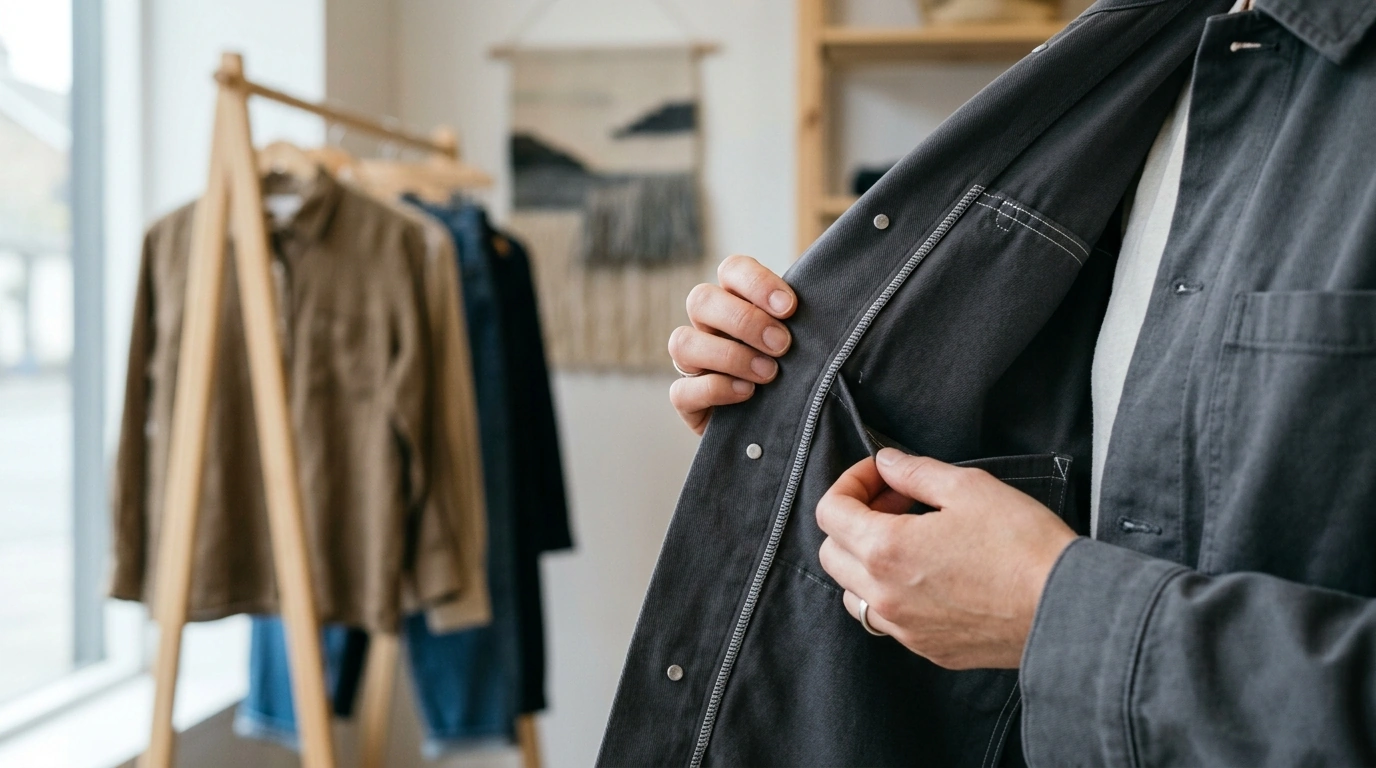
Trends can be fun, but they’re not a reliable signal of durability. A garment that earns repeat wear usually has the basics done right: solid fiber content, a fabric weight that suits the item, neat stitching, clean seam finishes, and hardware that doesn’t fight you every time you zip or button up. Those details remain valuable long after the “drop” excitement fades.
Hype, on the other hand, is often built on scarcity, influencer styling, limited releases, and strong branding. Sometimes a hyped piece is genuinely well made—but the buzz itself doesn’t prove anything about seam strength, dye stability, or how the fabric will look after ten washes.
A smarter definition of a “good buy” is cost-per-wear plus comfort, versatility, and repairability. The goal isn’t a closet full of options; it’s fewer pieces that work across outfits and seasons without needing constant replacement.
| What to check | Quality-leaning signs | Hype-leaning signs |
|---|---|---|
| Fabric & hand-feel | Substantial weight for the garment type; even texture; minimal pilling risk | Thin fabric that clings oddly; feels scratchy or flimsy; pills in-store |
| Stitching | Straight seams; consistent stitch length; no loose threads | Wavy seams; skipped stitches; threads already fraying |
| Seam finishing | Bound, flat-felled, overlocked cleanly; stable hems | Raw/weak edges; twisting hems; seams feel bulky or fragile |
| Hardware | Smooth zippers; secure buttons; reinforced snaps | Sticky zips; loose buttons; decorative hardware that bends easily |
| Fit & pattern | Balanced drape; aligned stripes/plaids where it matters; comfortable range of motion | Looks good only in one pose; pulls at stress points; pattern mismatch everywhere |
| Care & longevity | Clear care label; fabric can be cleaned without special treatment most of the time | Requires delicate care for basic use; “dry clean only” on casual items without reason |
Fiber content helps predict comfort, durability, and how an item will age. Natural fibers like cotton, wool, linen, and silk can wear beautifully when the fabric is well made. Synthetics like polyester, nylon, and elastane aren’t automatically “bad”—they can add strength, stretch recovery, and wrinkle resistance when used on purpose.
Blends are often where the best everyday performance happens. A small percentage of elastane can keep denim from bagging out at the knees. Nylon can improve abrasion resistance in sweaters and active layers. Viscose can add drape, but it performs best when the weave is stable and the garment is constructed to handle movement.
Where labels become a warning sign is with “mystery blends” that feel fuzzy, pill quickly, or trap heat. Low-quality acrylics and brushed polyester knits may look plush on day one and look tired by week three. A simple test is to hold the fabric up to light: if areas that should be opaque look sheer (especially over seams or pockets), it may signal a loose knit, thin weaving, or short fibers that won’t hold up well.
Also pay attention to immediate red flags: fabric that pills when rubbed lightly, a rough hand-feel despite “buttery soft” marketing, or shiny stretch that looks stressed around seams and closures.
Construction is the part you can’t filter with good lighting. If shopping in-store, turn the garment inside out. Clean seam allowances and consistent finishing usually reflect better manufacturing standards overall.
Focus on high-stress points: underarms, crotch seams, pocket corners, and side slits. Reinforcement like bar tacks, tighter stitching, or sturdier seam finishes helps prevent blowouts. Hems should lie flat without rippling; twisted side seams can point to off-grain cutting or unstable fabric that will skew after washing.
Finally, check closures. Buttons and snaps should be firmly attached, ideally with an interior anchor (like a backing button). Zippers should glide without catching. If care labels are unclear or missing, that’s a problem—U.S. guidance around care labeling exists for a reason, and clear instructions support longer wear. Helpful references include the FTC’s Care Labeling Rule and the standardized symbols used in ISO 3758 textile care labeling.
Replaceable components are a quiet sign of value—resolable shoes, detachable buttons, and repair-friendly seams keep favorites wearable longer. For wool pieces, following fiber-specific care guidance can make a noticeable difference over time; see Woolmark’s wool care guidance for practical upkeep habits.
Check the fiber label, hold the fabric to light for density, inspect seams inside-out for straight stitching and clean finishing, test hardware (zippers/buttons) for smooth function, and look for reinforcement at stress points like pockets and underarms.
No—synthetics can be highly durable and functional. Quality depends on the fiber grade, the knit or weave, finishing, and whether the fabric matches the garment’s job (like nylon for abrasion resistance or elastane for stretch recovery).
It’s worth it when construction and fabric quality hold up under inspection, the fit works with multiple outfits, care needs are realistic, and the expected cost-per-wear makes sense. Reliable returns and the ability to repair small issues also add real value beyond branding.





Leave a comment