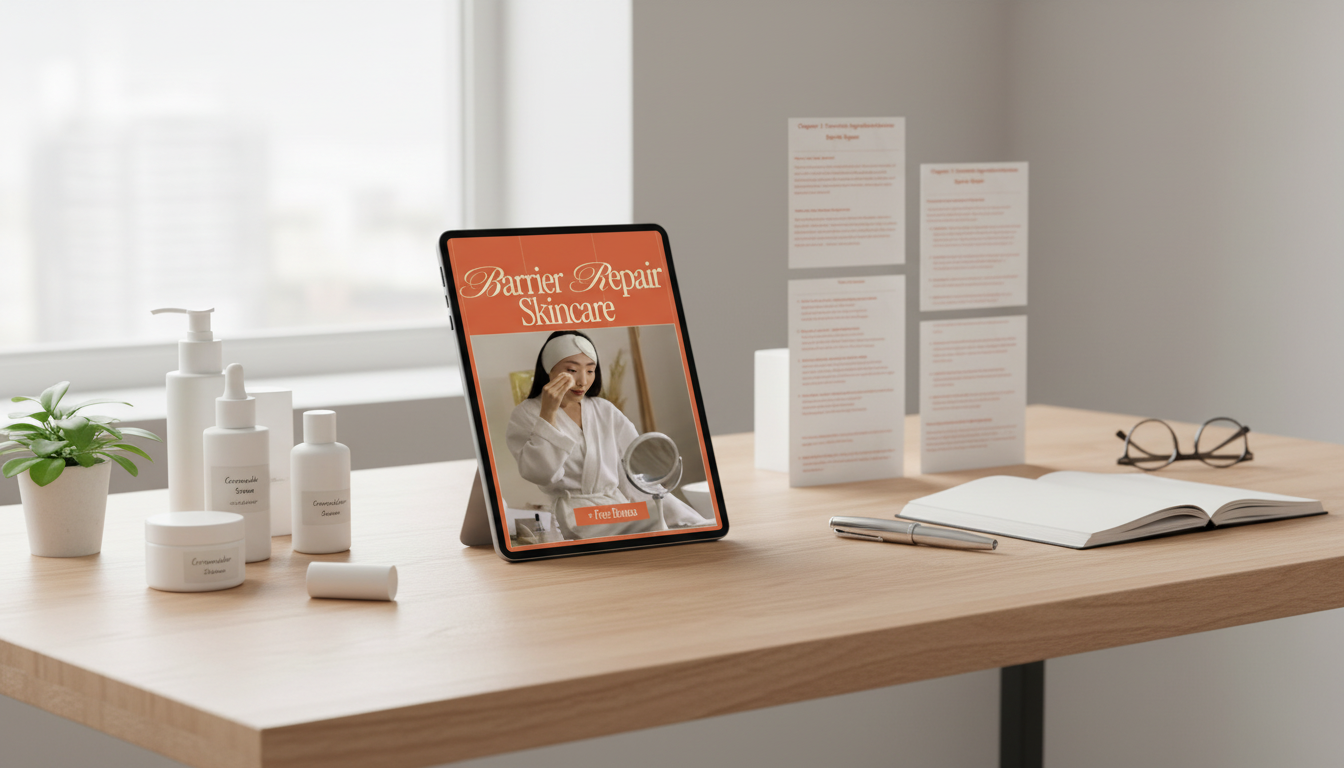
Barrier repair skincare focuses on restoring the skin’s outer defense layer so it can better hold water, tolerate actives, and stay comfortable. When the barrier is stressed, skin often feels tight, stings with products that used to be fine, looks dull, and reacts more easily to weather or friction. The approach isn’t about chasing a single “miracle” ingredient—it’s about choosing the right cleanser, hydrator, moisturizer, and a few proven lipids in a sequence that supports recovery.
The “skin barrier” mainly refers to the outermost epidermal layer (the stratum corneum) plus the surface film sitting on top of it. Think of it as both a shield (against irritants and microbes) and a water-management system (to keep hydration in and excess irritation out).
A helpful way to picture it is the “bricks and mortar” model: corneocytes (dead, flattened skin cells) are the bricks, while lipids—especially ceramides, cholesterol, and fatty acids—act like mortar. When that lipid “mortar” is depleted or disorganized, water escapes more quickly and skin becomes easier to overwhelm.
When the barrier is supported, desquamation (normal shedding) stays smooth, the surface feels comfortable, and skin holds up better to friction, wind, and low humidity. Barrier support also means respecting the skin’s microbiome and avoiding repeated irritation that can keep inflammation simmering.
Barrier stress often looks like sensitivity, but the clues are more specific: stinging with bland products, tightness after cleansing, flaking that returns quickly, lingering redness, or breakouts that show up alongside dryness. Itchiness and a rough, “sandpapery” feel can also show up—especially when exfoliating doesn’t help (or makes it worse).
| What you notice | Common triggers | Best first step |
|---|---|---|
| Stinging when applying skincare | Overuse of acids/retinoids, fragrance, harsh cleansers | Pause strong actives; switch to bland cleanser + rich moisturizer |
| Tightness after washing | High-foaming cleanser, hot water, frequent cleansing | Use lukewarm water; gentle cleanser; moisturize on damp skin |
| Flaking + redness | Low humidity, wind, exfoliation, peeling treatments | Add occlusive layer at night; reduce exfoliation frequency |
| Dryness + clogged pores | Compensatory over-moisturizing with heavy products, occlusive over dirty skin | Simplify routine; cleanse gently; choose non-comedogenic barrier lipids |
| Persistent irritation around mouth/nose | Friction, mask rubbing, strong toothpaste, retinoid migration | Apply protective balm to friction zones; buffer actives away from edges |
When the barrier’s lipids are reduced or out of alignment, transepidermal water loss (TEWL) increases. That means skin dehydrates faster, then reacts more intensely to things it would normally tolerate—like water, mild cleansers, sweat, or sunscreen.
Timing matters. Comfort can improve in days when you stop the “leak,” but deeper resilience often takes weeks, depending on how compromised the barrier was and whether triggers (like over-exfoliation or harsh cleansing) are truly removed. For general skin-health guidance on dryness and irritation, sources like the American Academy of Dermatology Association and the Cleveland Clinic align with this “gentle + consistent” approach.
Frequent exfoliating acids, strong low-pH vitamin C, high-percentage retinoids, scrubs, alcohol-heavy toners, and heavily fragranced products can keep the irritation cycle going. If you’re also managing eczema-prone or highly reactive skin, the National Eczema Association offers helpful context on why barrier protection matters.
If symptoms overlap (dryness plus breakouts, sensitivity plus uneven texture), a structured guide can help you decide what to change first and what to leave alone. Barrier Repair Skincare eBook – Learn What Barrier Repair Skincare Means, Skin Barrier Science, Ingredients & AI-Powered Routine Guide lays out the core science, ingredient roles, and routine templates you can adjust to your tolerance.
Since environment plays a big role in barrier stress, especially when indoor air is very dry, Cool Without the Cost: Your Smart Guide to Saving on Air Conditioning | Digital Download to Lower Bills and Stay Comfortable | Practical Energy-Saving Tips to save on air conditioning costs can be a useful companion for reducing over-drying conditions at home without sacrificing comfort.
And because stress can amplify reactivity and picking/touching habits, How to Build a Weekly Gratitude Habit That Transforms Your Life | Guide on How to Create a Weekly Gratitude Habit for Emotional, Social, and Personal Growth offers a simple structure for consistency—an underrated factor in sticking with a gentle routine long enough to see results.
Many people notice less tightness and stinging within a few days of simplifying and moisturizing consistently, but stronger resilience often takes several weeks. The timeline varies based on the trigger (like over-exfoliation vs. climate) and how strictly irritation is reduced.
It’s usually best to pause strong exfoliants and retinoids during the 7–14 day reset phase, then reintroduce one at a time at low frequency. If burning, persistent redness, or worsening dryness shows up, step back and return to the basic routine.
Look for non-greasy formulas that include ceramides with cholesterol and fatty acids, plus humectants like glycerin or panthenol for hydration without heaviness. Use gentle cleansing to avoid over-stripping, and keep occlusives thin and targeted if you’re prone to clogged pores.






Leave a comment