
Potty training tends to stall not because a child “can’t,” but because timing, routines, and expectations don’t match real life. A calmer plan combines child-readiness cues with consistent steps, quick troubleshooting, and a simple way to track progress. AI-assisted guidance can make it easier to spot patterns (like the usual accident window), adjust schedules, and stay consistent—without turning the process into a daily power struggle.
For baseline guidance and safety considerations, the American Academy of Pediatrics and the Mayo Clinic offer practical overviews that align well with the readiness-first approach below.
Readiness usually shows up as a cluster of signs, not a single milestone. Look for longer dry stretches, predictable bowel movements, interest in the bathroom, the ability to follow simple steps, and discomfort with wet diapers. When several of these are happening at once, active training tends to go more smoothly.
It also helps to separate “curious” from “ready.” Curiosity is a green light for low-pressure exposure—reading a potty book, sitting on the potty fully clothed, or watching a caregiver model handwashing. Readiness, on the other hand, supports an active plan with frequent prompts and consistent follow-through.
Even when skills are emerging, common mismatch signals can slow progress: big travel, a new sibling, daycare transitions, or sleep regressions. If life is unusually chaotic, it’s often kinder (and faster overall) to keep exposure light and start active training when routines stabilize.
Before starting, pick your primary training setting—home, daycare, or both—and align expectations with all caregivers. Consistency beats intensity.
| What you notice | What it can mean | Next step that keeps things low-pressure |
|---|---|---|
| Stays dry 2+ hours | Bladder control is developing | Offer potty sits at natural transitions (wake-up, before bath) |
| Hides to poop or asks for privacy | Awareness of bowel movement | Add a calm poop routine and a footstool for stability |
| Fights diaper changes | Dislikes wetness or wants autonomy | Introduce training underwear for short practice windows |
| Can pull pants up/down with help | Motor readiness | Practice “pants up/down” as a game outside training time |
| Shows zero interest and frequent meltdowns | Not ready or too much pressure | Pause active training; keep exposure and try again later |
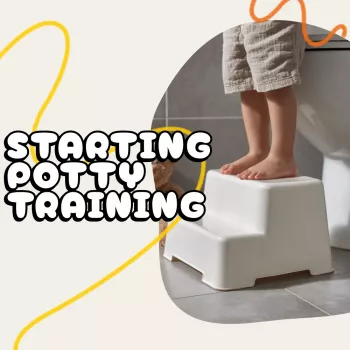
Environment is the quiet “helper” that reduces accidents and drama. Choose equipment that supports stability: either a potty chair or a toilet seat reducer plus a footstool so knees are slightly higher than hips. That position helps many toddlers relax for bowel movements and reduces fear of “falling in.”
Create a simple “potty path.” Keep bathrooms easy to access, skip complicated buttons or distractions, and use clothing that comes on/off quickly (elastic waistbands beat overalls and tricky snaps during the learning phase). Then rehearse the same short routine every time using the same language: “pants down, sit, pee/poop, wipe, pants up, flush, wash hands.”
Finally, stock a small cleanup kit in the rooms where your child plays most. Fewer frantic searches for wipes means a calmer response—which matters, because emotional intensity can make toddlers resist or hide accidents.
A one-week structure can keep adults consistent while still following the child’s cues. Think “rhythm,” not “deadline.”
Watch for cues (sudden stillness, grabbing, hiding, squatting) and offer frequent, short sits. The goal is to learn your child’s natural pattern without pressuring performance. Celebrate cooperation more than results.
| Time anchor | Prompt | Why it helps |
|---|---|---|
| Wake-up | Potty sit within 10 minutes | Catches morning pee and sets a predictable start |
| Before leaving home | Try-potty + quick handwash | Reduces car-seat accidents and builds a routine |
| After meals | Short sit (2–5 minutes) | Taps into natural digestion reflex for bowel movements |
| Before nap/quiet time | Potty sit | Supports longer dry stretches |
| Before bath/bed | Try-potty | Limits overnight leaks and builds confidence |
A structured digital guide can make that tracking and adjustment process faster—especially when multiple caregivers need to stay aligned. See AI Tips Potty Training: Smarter Guidance for Parents (digital guide and checklist) for a simple plan you can share across households or daycare notes.
For families coordinating daycare, grandparents, babysitters, or co-parents, a shareable tool like AI Tips Potty Training: Smarter Guidance for Parents (digital guide and checklist) can help everyone use the same script and the same response plan.
And because potty training often overlaps with seasonal challenges (more layers, cold-weather outings, and routine changes), keeping a general caregiver reference on hand can be useful too: Protecting Kids From Winter Cold – Essential Ebook with Children Winter Cold Protection Tips for Parents & Caregivers.
Readiness matters more than a specific age. Many toddlers begin between 18–36 months, but starting tends to go better when you see several readiness signs at once and daily routines are relatively stable.
Keep sits brief—often 2–5 minutes—so it doesn’t feel like a test. Transition-based sits (wake-up, after meals, before leaving) usually work better than long sessions.
That’s a normal “generalization” stage. Add a consistent pre-leave potty routine, use easy-off clothing, and do short practice outings that gradually get longer as confidence improves.





Leave a comment