Crochet can feel mysterious at first—hooks, yarn labels, unfamiliar stitch names—but it becomes approachable fast with a simple plan and a few reliable techniques. The key is stacking small wins: choose beginner-friendly materials, practice a handful of core stitches, learn the “shape” of a pattern, and finish a few early projects that look neat. Below is a calm, practical path from your first chain to a finished piece, plus troubleshooting tips for the most common hiccups (tension, edges, counting, and twisty starting chains).
Thank you for reading this post, don't forget to subscribe!
🔥 Don’t miss this:
Get our Best-Selling Digital Bundle here 👉 https://guilleni.com
✔ Instant Download
✔ High Value
✔ Limited Time Offer
Crochet is built from loops pulled through loops. That’s it—most patterns are simply different combinations of a small set of repeatable movements. The learning curve usually comes from the “invisible” parts: seeing where to insert the hook, keeping your tension steady, and recognizing what a stitch looks like at the end of a row.
Common early hurdles include uneven tension, accidentally skipping the first or last stitch, confusion around abbreviations, and using yarn that’s hard to see (very dark or fuzzy yarn can hide the loops you need to count). The fastest way to progress is to practice short swatches that isolate one skill—chains only, single crochet rows only, a small square of increases—before committing to a big project.
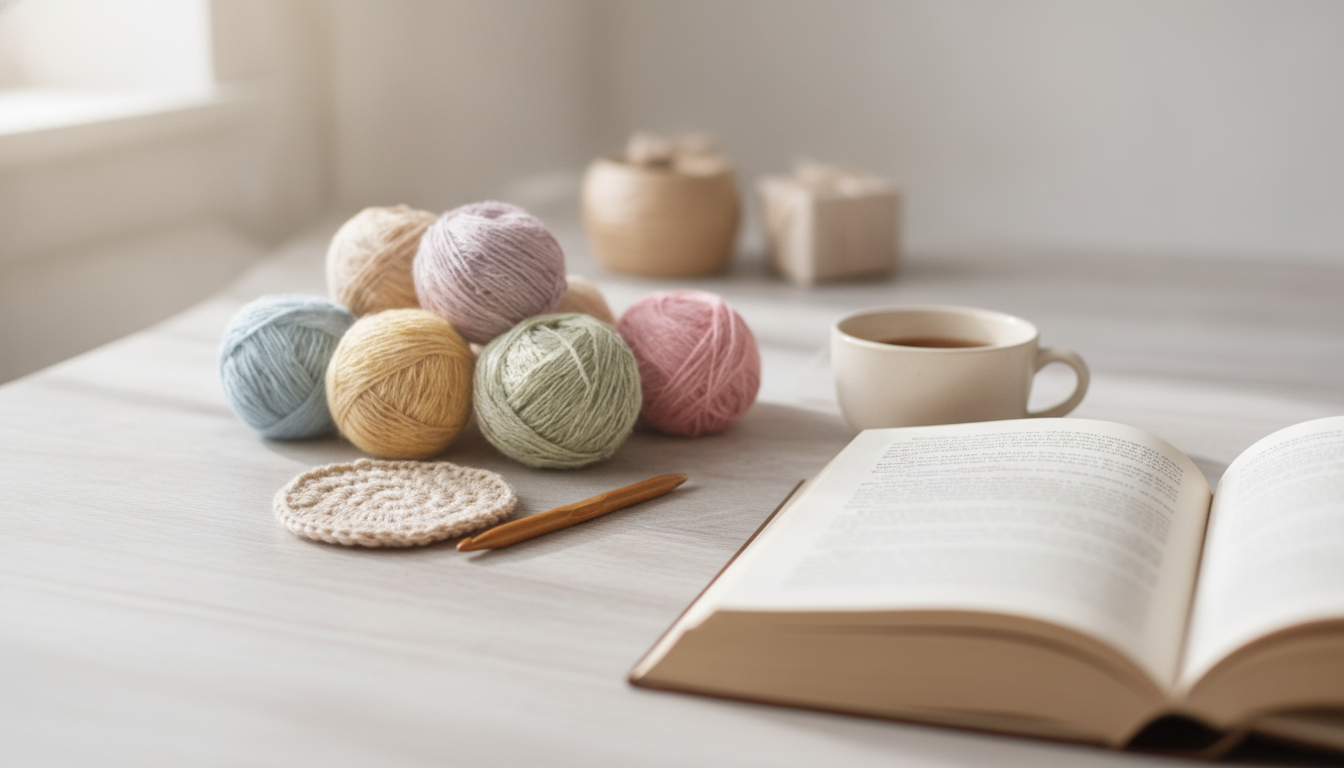
Starting with the right materials makes learning dramatically smoother. A mid-range hook (often around 5.0 mm / H-8) gives clear stitch definition without feeling too tight or too floppy, and it’s comfortable for most hands. Pair it with smooth, light-colored, medium-weight yarn so you can clearly see the “V” shapes on top of stitches and the edges of rows.
A few small tools also prevent frustration: sharp scissors, a yarn needle for weaving ends, stitch markers (or paper clips in a pinch), and a measuring tape. For comfort, keep your grip relaxed, support your wrists, and practice in short sessions—10 to 20 minutes is plenty when you’re building muscle memory.
| Item | Good for beginners because | Watch out for |
|---|---|---|
| Medium-weight smooth yarn | Stitches are easy to see and count | Very fuzzy or eyelash textures hide loops |
| Light or bright color yarn | Helps spot the top two loops and row edges | Very dark yarn makes counting harder |
| Mid-size crochet hook | Balances speed and control for basic stitches | Too small can feel tight; too large can feel floppy |
| Stitch markers | Prevents losing the first/last stitch of a row | Markers must clip or loop easily without snagging |
When you learn in a predictable order, each new stitch feels like a small variation—not a whole new language.
Aim for chains that are even in size and not pulled too tight. Tight chains make it hard to insert your hook on the next row. A helpful benchmark is making 20–30 chains comfortably without your hands tensing up.
Single crochet teaches the essentials: where to insert the hook, how to pull up a loop, and how to keep stitch height consistent. As you practice, look for two loops at the top of each stitch; most basic patterns work under those two loops.
Patterns become much easier once you treat abbreviations like a tiny vocabulary list. A starter glossary goes a long way: ch, sl st, sc, hdc, dc, inc, dec, st(s), rep. For a reliable reference, the Craft Yarn Council maintains a standard list of crochet abbreviations: Craft Yarn Council: Crochet Abbreviations.
One crucial detail: confirm whether the pattern uses US or UK terms. For example, “dc” means double crochet in US terms but double crochet in UK terms is a different stitch. When you’re choosing yarn, the Craft Yarn Council’s yarn weight system is a helpful guide for matching patterns to the right thickness: Craft Yarn Council: Yarn Weight Standards.
For deeper community learning and education, the Crochet Guild of America is a long-running resource for crochet knowledge and inspiration.
Many beginners get comfortable with chains and single crochet in a few short sessions. With a couple of weeks of consistent practice, tension and counting usually become steadier and finishing a small project feels realistic.
Smooth, light-colored, medium-weight yarn is the easiest because the stitch loops are clear and simple to count. Avoid fuzzy, highly textured, or very dark yarn at first since it can hide where your hook needs to go.
Uneven edges are most often caused by missing the first or last stitch, or by inconsistent turning chains. Use stitch markers on row ends and count every row until your edges start to match naturally.