A relaxed watercolor practice can be less about perfection and more about small wins: simple shapes, gentle washes, and a few minutes of quiet focus. Soft Strokes Simple Joys is designed for beginners who want easy painting ideas that feel soothing and achievable, whether the goal is stress relief, a new hobby, or a consistent creative routine. For more guidance, see Fearless Watercolor For Beginners Adventurous Painting ….
Thank you for reading this post, don't forget to subscribe!
🔥 Don’t miss this:
Get our Best-Selling Digital Bundle here 👉 https://guilleni.com
✔ Instant Download
✔ High Value
✔ Limited Time Offer
Watercolor can look intimidating, but it becomes much friendlier when the goals are small, clear, and repeatable. This calm approach is built around quick, complete paintings you can finish in one sitting—so each session ends with a sense of “I did it.” For further reading, see My Favorite Watercolor Books – Dots & Dust.
If you’d like a bit of art history inspiration while you learn, watercolor has a long tradition of expressive simplicity—see the Smithsonian’s overview of Winslow Homer’s watercolors or the broader background at Britannica’s watercolor painting entry.
When the hardest part is deciding what to paint (and how to begin), paint-alongs remove the mental clutter. Soft Strokes Simple Joys – Beginner Watercolor eBook is structured to feel like an easy on-ramp: clear steps, approachable projects, and the kind of repetition that builds comfort without boredom.
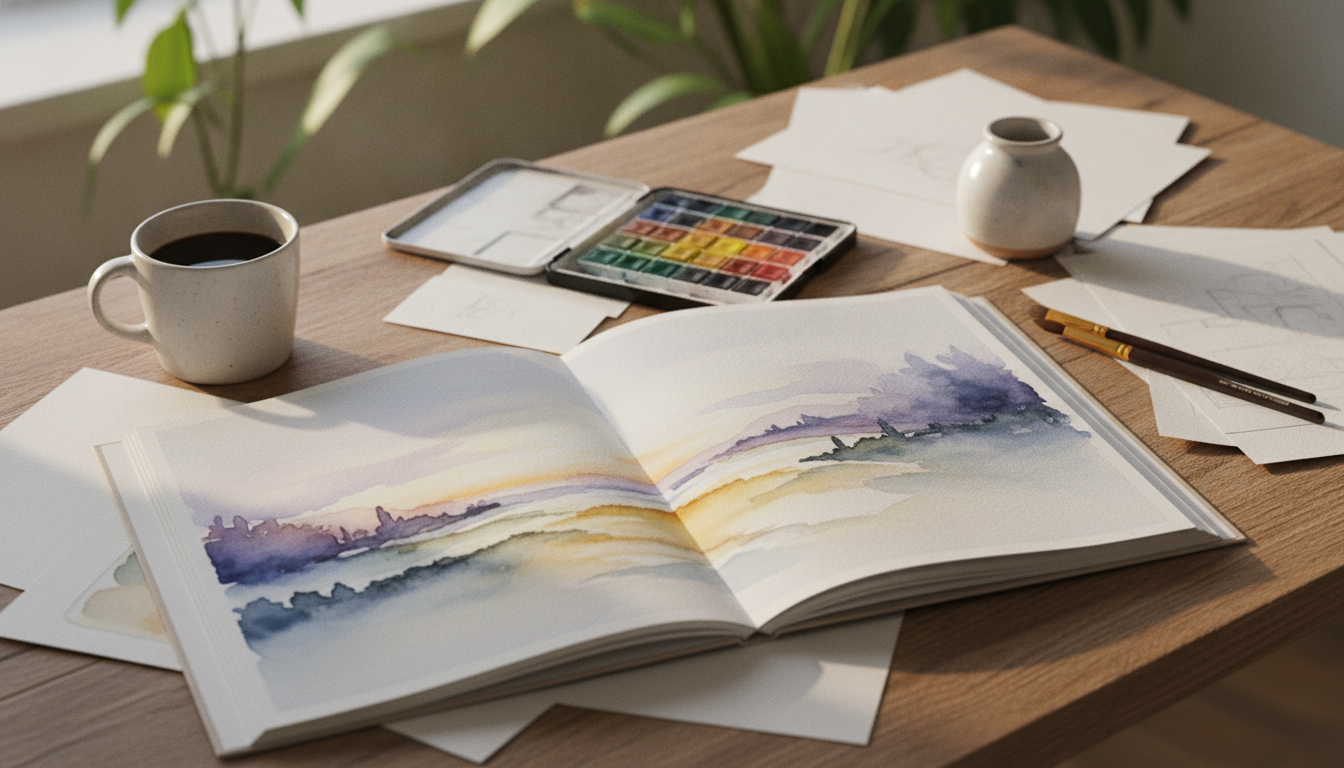
Keeping supplies minimal helps the practice feel inviting instead of complicated. A small kit is enough to learn the essentials—water control, layering, and soft edges—without turning the table into a “project” before you even paint.
| Item | Budget-friendly option | Why it helps beginners |
|---|---|---|
| Watercolor paper | 140 lb / 300 gsm cold-press pad | Handles water better for smoother washes and fewer backruns |
| Brush | Round size 6–8 | Versatile for lines, petals, and washes with one tool |
| Paint | Small student set (12 colors) | Enough variety without overwhelming color choices |
| Palette | Plastic palette or ceramic plate | Makes mixing easier and encourages controlled dilution |
| Water + towel | Two cups + paper towel | Cleaner color mixing and quick brush moisture control |
The most calming routines are the ones that feel easy to start. A short session done regularly will do more for confidence than a long session you avoid because it feels like “too much.”
If you enjoy pairing creativity with reflective habits, How to Build a Weekly Gratitude Habit That Transforms Your Life can complement a gentle art routine—especially if you like ending a session by noting one small thing that went well.
Beginner-friendly subjects work best when they’re flexible: you can finish fast, repeat them for practice, and still make something pretty. These ideas are also forgiving—soft edges and loose shapes are part of the charm.
Soft Strokes Simple Joys – Beginner Watercolor eBook | Easy Watercolor Painting Ideas for Relaxed, Creative Practice is a digital watercolor eBook designed around easy painting ideas and relaxed practice. It works well alongside a small starter kit: watercolor paper, one round brush, and a compact paint set.
Yes. The projects rely on simple shapes and gentle layering rather than detailed drawing, and repeating a subject builds confidence quickly even if you’re starting from zero.
Watercolor paper, a basic paint set, one round brush, a palette, water, and a towel (or paper towel) are enough to get started. Optional extras include a smaller round brush for details and tape to reduce warping.
About 10–20 minutes is plenty. A short warm-up plus one small study keeps the routine consistent without feeling like a big commitment.