25% off on product page · save $6.66
How to Choose a Family Car for Comfort and Safety
Count the people who regularly travel with you, including anyone who joins school runs, errands, or weekend trips. Consider their ages and whether they use rear-facing seats, forward-facing seats, or boosters. A vehicle that seats everyone on paper may feel crowded once those seats are installed.
Next, picture your usual routes. If you park in a narrow garage or commute through crowded streets, a smaller vehicle may make daily driving less stressful. If long trips are common, rear-seat legroom and easy access to snacks and supplies may matter more.
Plan for change, too. Growing children need more legroom, and your cargo might shift from a stroller and diaper bag to sports equipment or musical instruments. Choose a vehicle that can handle the routines you expect to have, not just the ones you have today.
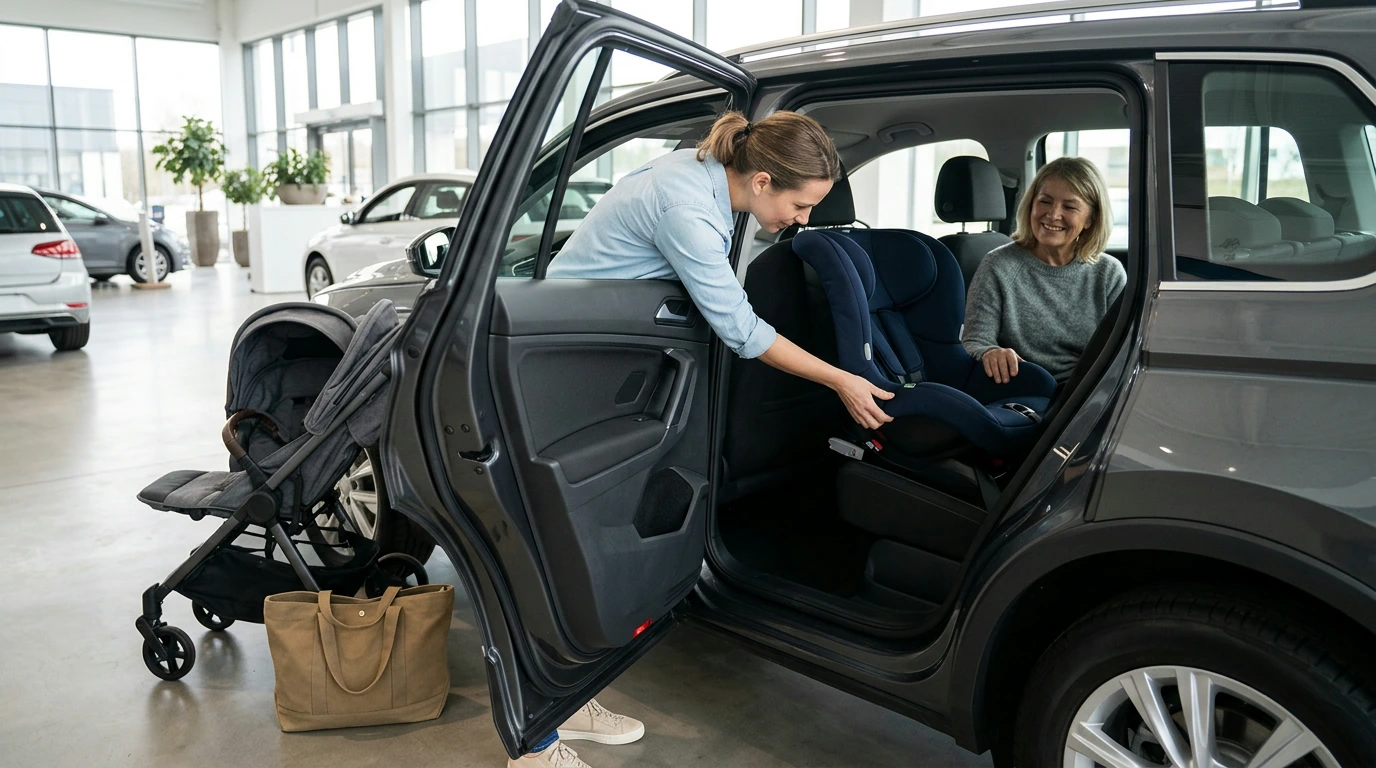
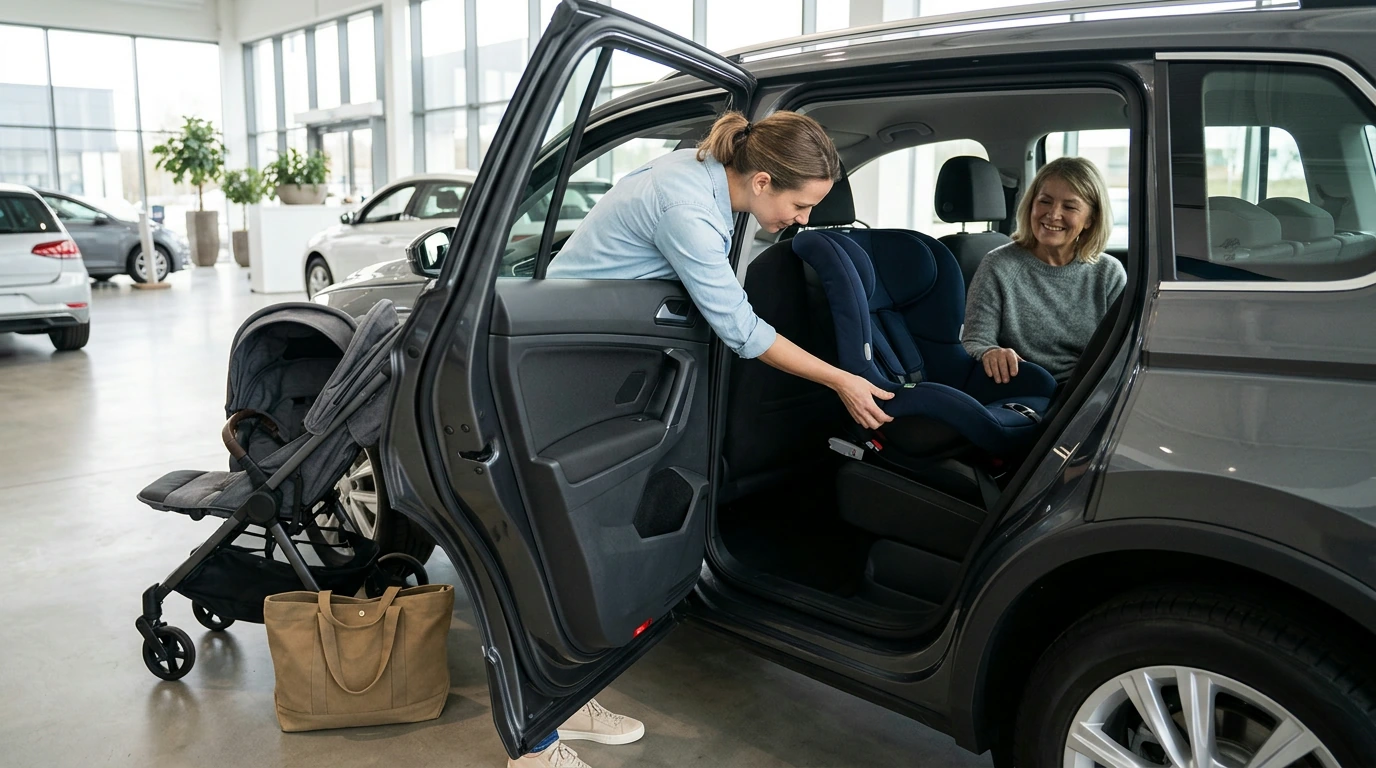
Open the rear doors and see how much room you have to secure a child. If you’re considering a third row, try reaching it with child seats installed and ask older passengers to test the space.
Bring a stroller, sports bag, or other bulky item to see whether it fits through the cargo opening. Check the space remaining when your required seats are in use.
These are starting points, not guarantees. Space and features vary by model, trim, and year.
Featured in this guide
The Best Family Cars for Comfort and Convenience | Ultimate eBook Guide to Choosing Family Friendly Cars with Child Space, Safety, and Smart Features
Review NHTSA and IIHS crash-test results for the specific model and year. Check for open safety recalls; a vehicle identification number can help you identify recalls for a particular vehicle.
Bring your child seats to the test drive and install them according to both the vehicle and seat manufacturers’ instructions. Check access to buckles and anchors, secure each seat correctly, and leave enough room for front passengers. If you use multiple child seats, try the complete arrangement.
Automatic emergency braking, blind-spot warnings, and lane-departure alerts can be useful aids. Their availability and operation vary, and they do not replace attentive driving. Learn their limits before relying on them.
Take your family along for a test drive when possible. Adjust the driver’s seat and mirrors, let passengers settle in, and try parking and backing out. Check whether children can climb in and out comfortably.
Consider conveniences you’ll actually use, such as rear climate controls, charging ports, cup holders, and reachable storage. Then estimate insurance, fuel or charging, maintenance, taxes, registration, and financing. Insurance quotes for each shortlisted vehicle can help you compare the total against your household budget.
Our The Best Family Cars for Comfort and Convenience eBook focuses on child space, safety, comfort, and smart features. Use it as you develop your shortlist, then compare each vehicle against your must-haves in person.
For another part of family travel planning, our Protecting Kids From Winter Cold eBook offers guidance for parents and caregivers preparing for colder weather.
Before choosing, compare the product details with your daily routine, available space, care needs, and preferred setup. The strongest option is usually the one that fits the intended use clearly and remains simple to clean, store, and check before repeat use.
It is also worth checking measurements, material notes, included parts, and compatibility details so the item matches the way it will be used after delivery.
Before choosing, compare the product details with your daily routine, available space, care needs, and preferred setup. The strongest option is usually the one that fits the intended use clearly and remains simple to clean, store, and check before repeat use.
There is no single best family car. Choose one that fits your passengers, child seats, safety needs, budget, and daily routine.
The $3,000 rule has no single standard definition, so ask what someone means before using it to make a decision. A low purchase price alone does not account for repairs, insurance, taxes, or other ownership costs.



Leave a comment