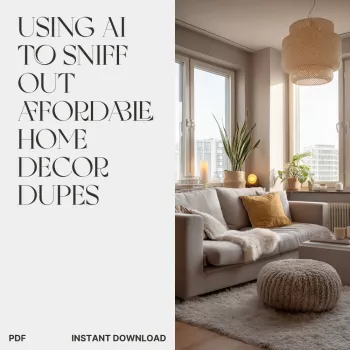
Designer-inspired rooms don’t have to come with designer price tags. With the right AI tools and a simple process, it’s possible to identify lookalike decor pieces, compare materials and dimensions, and spot budget-friendly alternatives that still fit the vibe. This guide breaks down a practical, repeatable method for sourcing decor dupes responsibly—without sacrificing quality or ending up with the wrong scale for the space.
A true decor dupe is a similar-looking item that echoes key style cues—think silhouette, shape, finish, and overall visual weight—without copying branding or pretending to be the original. The line matters: a dupe is “inspired by,” while a counterfeit tries to deceive.
The fastest results come from combining visual search (to find similar shapes) with text-based research (to refine the right descriptors and filters). A few minutes up front can prevent a return later.
For general shopping safety and scam-spotting habits—especially when a deal looks too good—cross-check with the Federal Trade Commission’s consumer advice.
Save one clean image plus any available name, dimensions, and material notes. If it’s a styled room photo, grab a close-up crop of the specific piece too.
Turn the inspiration piece into a quick “spec card”: size range, dominant material, finish, color temperature, and style tags (modern, coastal, farmhouse, Art Deco, etc.).
Ask for 15–25 keyword variations that include materials and shape descriptors. Specificity improves results: “fluted ceramic lamp with linen drum shade” tends to outperform “cute lamp.”
Upload the image to Lens-style tools to find close matches. Pay attention to recurring descriptors across results (for example: “arched,” “antique brass,” “thin frame,” “travertine-look”). Those repeated terms are often the missing link.
Check big-box retailers, mid-range brands, resale marketplaces, and local pickup platforms. Prioritize listings with multiple photos, clear measurements, and straightforward return policies.
Use a simple scoring system so you’re not choosing based on one perfect photo. Focus on total delivered cost (item + shipping + tax) and the risk level if it arrives wrong.
| Criteria | What to check | Why it matters |
|---|---|---|
| Dimensions | Height/width/depth; shade size; seat height; mirror height | Prevents pieces that look right online but feel off in the room |
| Materials | Solid wood vs veneer; metal gauge; stone vs faux stone; fabric composition | Predicts durability, weight, and maintenance |
| Finish & tone | Warm/cool undertones; matte/satin/gloss; grain direction | Keeps the room cohesive under different lighting |
| Construction | Joinery, backing, hardware, cord quality, stability | Reduces wobble, warping, and early wear |
| Policy & proof | Return window, warranty, real photos, reviews with images | Lowers risk when buying sight-unseen |
For a streamlined version of this system you can keep open while browsing, Smart Style: Using AI to Sniff Out Affordable Home Decor Dupes (digital guide) includes prompt templates, a practical rubric, and a quick-start workflow designed to work on a phone or laptop.
If home upgrades also include comfort and utility, Cool Without the Cost: Your Smart Guide to Saving on Air Conditioning is a simple companion for cutting AC costs while staying comfortable.
Run a visual search to find similar silhouettes, then use AI to extract attributes like approximate size, material, and finish. Generate multiple keyword variations and verify measurements and material disclosures before purchasing.
The price gap often comes from branding, different materials (solid vs veneer), manufacturing methods, and distribution costs. A strong dupe prioritizes a similar silhouette and finish while meeting acceptable quality and safety standards.
Look for real-photo reviews, clear measurements, and transparent return policies, then score options using a rubric. Before buying, confirm scale at home with tape outlines and double-check the listed materials.







Leave a comment