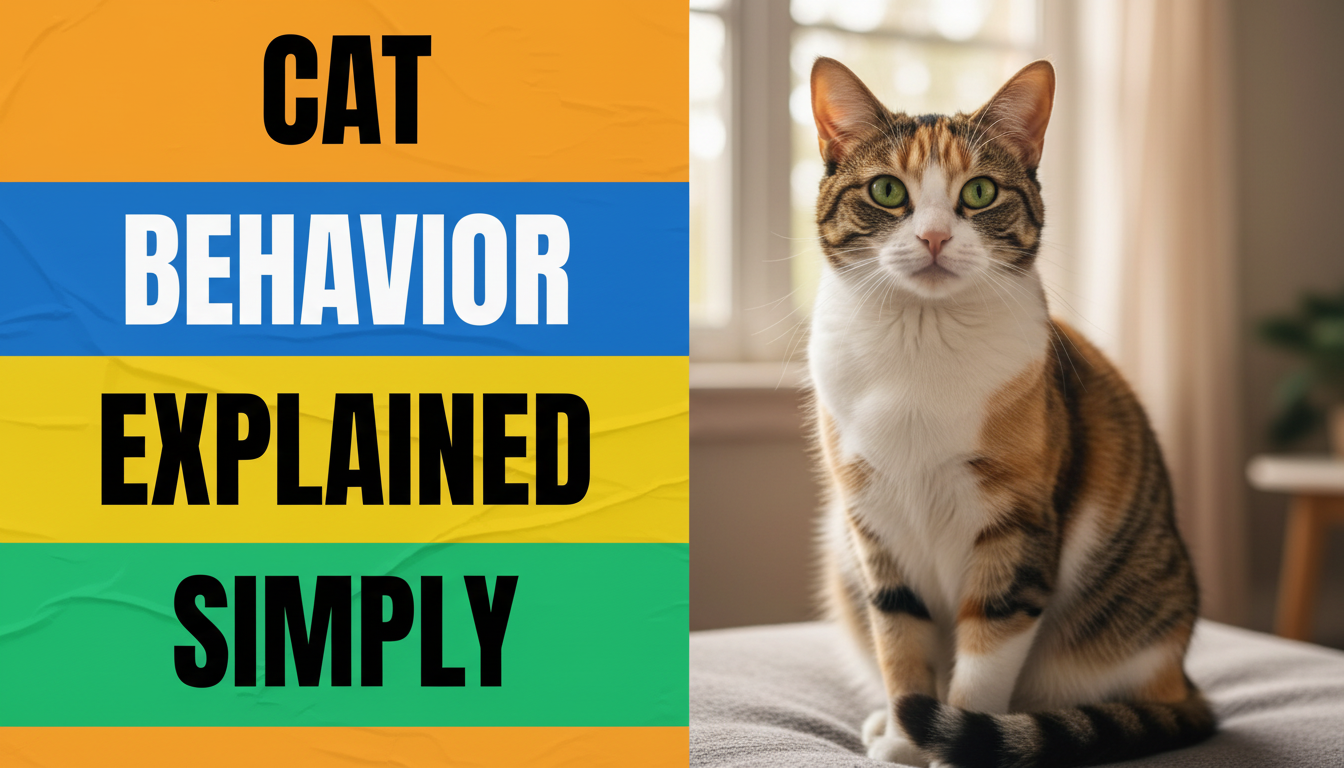
Cats communicate constantly through body language, routines, and small changes in behavior. When those signals are misunderstood, common issues—scratching, night zoomies, hiding, or sudden swats—can feel random or personal. Clear patterns make cat behavior easier to read, so daily choices (where you place a scratching post, how you end a play session, when you pause petting) become calm, cat-friendly ways to build trust.
Thank you for reading this post, don't forget to subscribe!
🔥 Don’t miss this:
Get our Best-Selling Digital Bundle here 👉 https://guilleni.com
✔ Instant Download
✔ High Value
✔ Limited Time Offer
Most cat communication is quiet and physical. Posture, tail position, ear direction, and overall tension usually tell the story before a sound ever does. Just as important: cats use distance as a “sentence.” Approaching, pausing, or leaving isn’t defiance—it’s information about comfort and safety.
Context changes everything. The same tail flick can mean “I’m excited” during play or “I’m done” during petting. A calm cat tends to be consistent, so sudden shifts (new hiding, new irritability, different litter box habits) are worth noticing early.
Start with the easiest signals to spot:
| Signal | What It Often Means | Helpful Response |
|---|---|---|
| Slow blink + relaxed posture | Comfort and trust | Slow blink back, speak softly, allow the cat to choose contact |
| Tail lashing + tense body | Overstimulation or irritation | Stop petting, give space, reduce noise and movement |
| Ears flattened + crouching | Fear or defensive stress | Back away, provide a hiding spot, avoid eye contact |
| Crouch + wiggle + focused stare | Play/hunt sequence | Redirect to a wand toy, end play before overstimulation |
| Rubbing cheeks on objects/people | Scent marking and social bonding | Let it happen; avoid strong cleaners on favorite rub spots |
Many cats “save” meows for humans. Meowing often means a request—food, play, attention, or access (to a room, a window, a lap). Purring is usually contentment, but it can also show up during stress or discomfort, so check the rest of the body: relaxed muscles and soft eyes suggest comfort; tight posture or hiding suggests something else.
Chirps and trills often sound like a friendly greeting or a “follow me.” Hissing and growling are not debate starters—they’re distance-increasing warnings. The best response is to stop what’s happening and create space.
Scratching is normal: it maintains claws, stretches shoulders and back, and leaves both visual and scent signals. The fix usually isn’t “stop scratching”—it’s “scratch here.” Place sturdy vertical and horizontal scratchers near sleep spots and common cat pathways, not hidden in a corner.
Climbing is about safety and curiosity. Height gives cats a secure vantage point, especially in busy homes. Knocking items down can be play, exploration, or attention-seeking. Reduce easy-to-topple clutter, add daily interactive play, and offer approved “busy” options like puzzle feeders. Punishment tends to increase stress and make behaviors worse; shaping the environment is more reliable.
Start with health. Straining, blood, sudden avoidance, or major changes in urination/defecation should prompt veterinary attention. When health checks out, the box setup is often the next issue: location (quiet, accessible), cleanliness (scooped daily), size (bigger is usually better), and litter texture (some cats strongly prefer certain types).
Stress frequently shows up here first. New pets, visitors, moving, or even a schedule shift can trigger avoidance. Replace blame with observation: note timing, location, and recent changes so patterns are easier to identify and correct.
Cats are naturally crepuscular—more active around dawn and dusk—especially if daytime is quiet. Zoomies often ramp up when needs aren’t met: not enough interactive play, boredom, or a routine that’s unpredictable.
If you want deeper guidance from feline health professionals and established cat welfare organizations, these resources are practical and trustworthy: American Association of Feline Practitioners (AAFP) – Cat Owner Resources and International Cat Care – Understanding Cat Behaviour.
This is often petting-induced overstimulation: the cat enjoys contact until it becomes “too much,” then uses a bite to end it. Watch for early signs like tail flicks, skin twitching, or ears turning sideways, and stop before the bite—shorter sessions and petting the cheeks/chin/head help.
Hissing is usually a warning and a request for distance, not an attack plan. Give space immediately, remove the trigger if possible, and rebuild comfort with calm routines and predictable interactions.
Keep a consistent evening routine: interactive play followed by a small meal often encourages longer rest afterward. Add enrichment (toy rotation, puzzle feeders, climbing routes) to reduce boredom and better match natural dawn/dusk activity patterns.