Quick Relaxation for Women On-the-Go: An Instant Checklist for Calm in Any Moment
Busy days can stack stress fast—between commutes, meetings, family needs, errands, and nonstop notifications. Quick relaxation works best when it’s simple, portable, and easy to remember under pressure. This guide offers an instant checklist of rapid techniques that fit into real life: a car line, a restroom break, a hallway reset, a lunch-minute pause, or the few quiet seconds before walking into a room.
Thank you for reading this post, don't forget to subscribe!
🔥 Don’t miss this:
Get our Best-Selling Digital Bundle here 👉 https://guilleni.com
✔ Instant Download
✔ High Value
✔ Limited Time Offer
These tools aren’t about “fixing” your day. They’re about interrupting the stress surge long enough for your body to shift gears. For more on evidence-based relaxation approaches, see the NIH overview of relaxation techniques and the American Psychological Association’s stress resources.
A 60-Second Reset: The Instant Checklist
When time is tight, the goal is “small and doable.” Run this checklist once, then repeat the pieces that helped most.
- Pause and label the moment: “stress is here,” without judging it.
- Drop the shoulders and unclench the jaw; soften the tongue from the roof of the mouth.
- Take 3 slow breaths with a longer exhale than inhale.
- Release tension with a quick scan: forehead, eyes, jaw, neck, hands, stomach.
- Pick one micro-action: sip water, step outside, stretch, or text a boundary-setting message.
- End with a cue word to anchor calm: “steady,” “safe,” or “enough.”
Quick Techniques That Travel Well
These options work in public, at your desk, or while moving between tasks—no special setup required.
- Breathing: Try 4–6 breathing (inhale 4, exhale 6) for 5 cycles to lower intensity quickly. If you prefer a structured approach, controlled breathing methods are widely used; see Cleveland Clinic’s explanation of box breathing and controlled breathing.
- Grounding: Use 5–4–3–2–1 senses (5 things seen, 4 felt, 3 heard, 2 smelled, 1 tasted) to shift out of spirals.
- Muscle release: Progressive muscle squeeze-and-drop (hands, shoulders, glutes) for 10 seconds each.
- Temperature shift: Cool water on wrists or a cold drink can help interrupt stress escalation.
- Eye relief: Look 20 feet away for 20 seconds to reduce screen strain and mental fatigue.
- Mini-walk: 2 minutes of brisk walking resets posture, breathing, and mood.
Choose the Right Method for the Situation
Stress isn’t one-size-fits-all. Match the technique to what your body and mind are doing right now.
- If the heart is racing: prioritize longer exhales and relaxed posture before anything else.
- If thoughts are looping: use grounding, naming objects, or a short written brain-dump.
- If irritation is high: do a tension release (squeeze-and-drop) and step away for 60–120 seconds if possible.
- If energy is crashing: open a window, stand up, hydrate, and do 3 energizing breaths (slightly faster inhale, slow exhale).
- If overwhelm is social: set a micro-boundary (“I need 5 minutes; I’ll be right back.”) and reset privately.
Fast picks: what to do when time is tight
| Moment |
What it feels like |
Best quick technique |
Time needed |
| Before a meeting |
Mind racing, tense chest |
4–6 breathing + shoulder drop |
60–90 seconds |
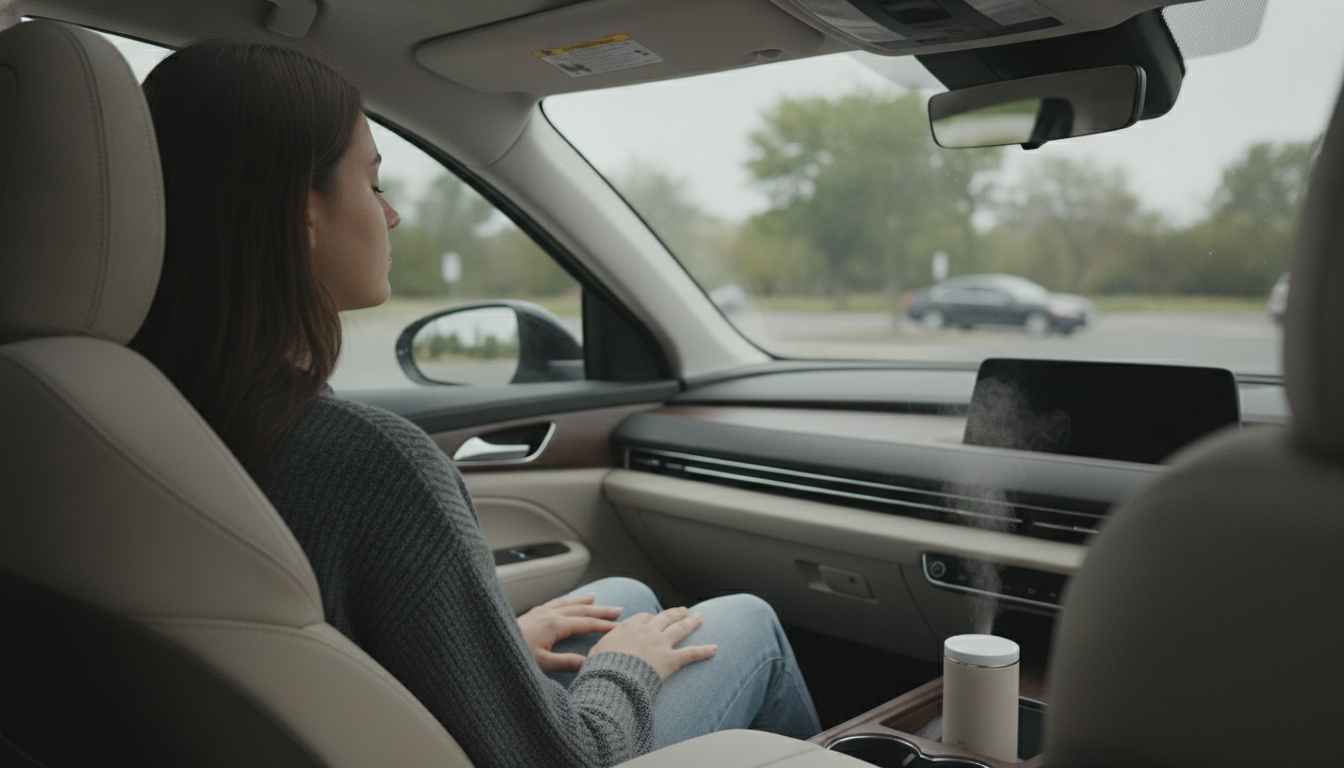
| In the car line |
Irritable, impatient |
Senses grounding + jaw unclench |
1–2 minutes |
| After a hard message |
Stomach tight, shaky |
Squeeze-and-drop + longer exhale |
2 minutes |
| Mid-afternoon slump |
Foggy, heavy eyelids |
Mini-walk + hydrate |
2–5 minutes |
| Too many tasks |
Overwhelm, scattered focus |
30-second brain-dump + choose 1 next step |
2–3 minutes |
Micro Self-Care for Real Schedules
Consistency comes from removing friction. These tweaks make calm easier to access when you’re already stretched thin.
- Make calm automatic: pair one technique with a daily cue (unlocking the phone, opening the laptop, washing hands).
- Build “tiny exits”: identify two places for quick resets (bathroom, stairwell, outside doorway).
- Use shorter loops: 3 breaths, 30-second stretch, 60-second grounding—repeat as needed rather than forcing a long session.
- Reduce friction: keep water nearby, save a one-minute timer on the home screen, store a calming note in the wallet.
- Keep it private: techniques that don’t draw attention—jaw release, exhale lengthening, toe press into the floor.
A Simple 7-Day Routine to Make It Stick
Think of this as “training for calm.” You’re teaching your nervous system that you can return to steady—quickly and on purpose.
- Day 1: Practice 4–6 breathing once in the morning and once before bed.
- Day 2: Add a shoulder-and-jaw release every time sitting down.
- Day 3: Use 5–4–3–2–1 grounding once during the workday.
- Day 4: Do one 2-minute walk reset.
- Day 5: Try a 30-second brain-dump before starting the next task.
- Day 6: Create a short boundary script and save it as a note for copy/paste.
- Day 7: Combine your top two techniques into a personal 90-second reset.
Digital Checklist Option for Instant Use
Recommended digital guides
FAQ
What is the fastest relaxation technique when there’s only one minute?
Use longer-exhale breathing: inhale for 4, exhale for 6, for about 5 cycles. Pair it with a shoulder drop and jaw unclench to signal safety to the body quickly.
Can quick relaxation help during anxiety spikes in public?
Yes—discreet tools like longer exhales, a toe-press into the floor, and 5–4–3–2–1 grounding can reduce intensity without drawing attention. If possible, step aside for 60 seconds (restroom, hallway, outside door) to reset privately.
How often should quick relaxation be practiced to feel easier over time?
Brief repetition matters more than long sessions. Aim for 2–4 quick practices per day tied to cues (like sitting down or unlocking your phone), and follow a simple 7-day ramp-up to make it automatic.
Recommended for you